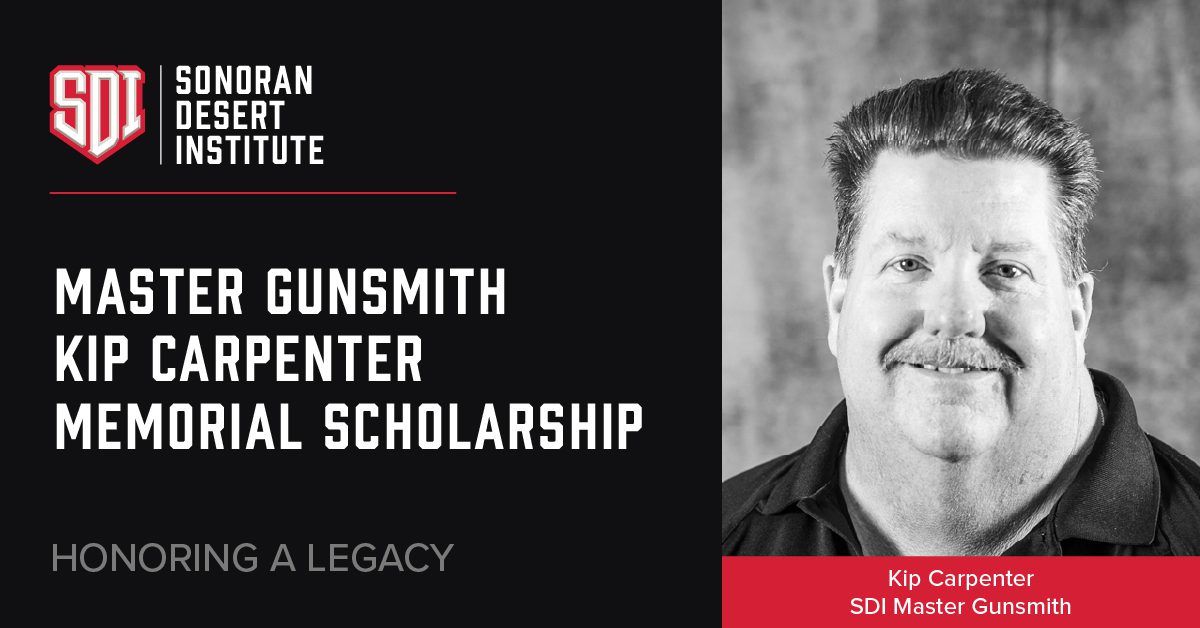
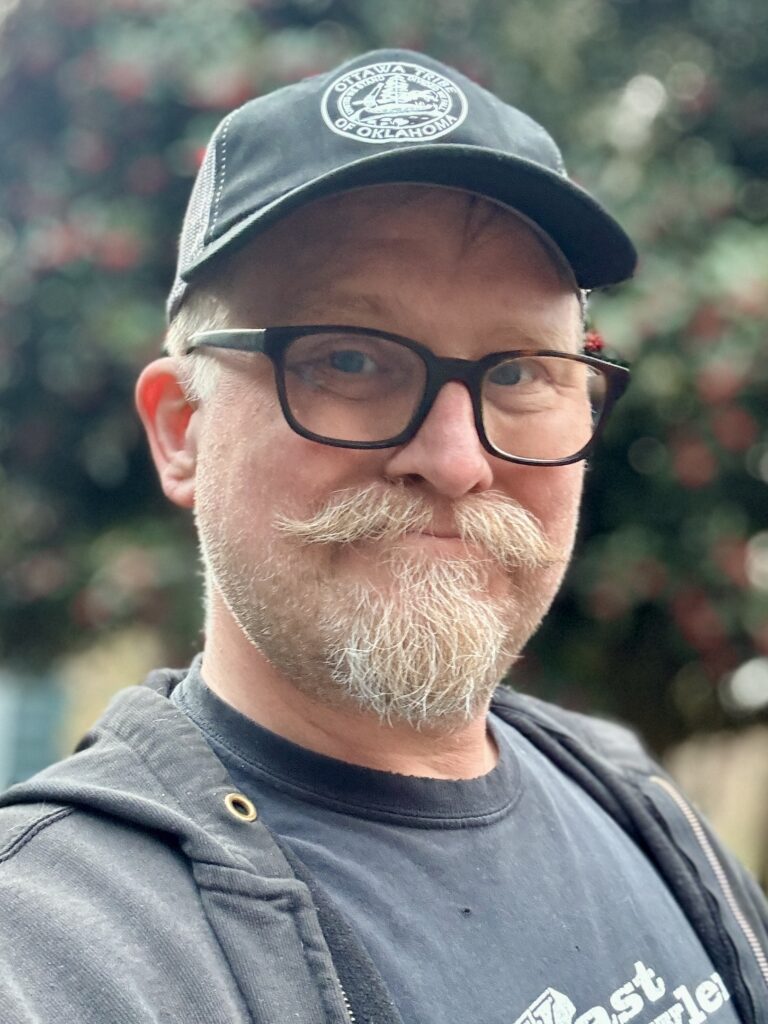
Sonoran Desert Institute has named Hinmaton Yalatkit Hisler as a recipient of the Master Gunsmith Kip Carpenter Memorial Scholarship. The award covers full tuition and fees for a student pursuing SDI’s Certificate in Firearms Technology – Gunsmithing or Associate of Science in Firearms Technology degree, and it goes to someone who has already shown what serious craftsmanship looks like. Hisler’s application made that case in three decades of work across metal trades most gunsmithing students never touch.
Honoring a Master Gunsmith’s Legacy
The scholarship carries the name of Kip Carpenter for a reason. Born in 1963 in Fort Walton Beach, Florida, Carpenter started learning gunsmithing at fourteen under his godfather, a competitive shooter and professional gunsmith. Over more than 35 years in the trade, he mastered firearm repair, machining, welding, and refinishing, and he built American Gunsmithing in Columbia, Tennessee into one of the state’s premier gunsmithing shops. He also served as a Constable and worked in high-risk security and dignitary protection as a team armorer.
In 2015, Carpenter joined SDI as an instructor and rose to Staff Master Gunsmith and lead instructor. His goal was straightforward: build the finest gunsmithing program in the country and hand his knowledge to the next generation. The scholarship in his name funds one gunsmithing student every fall and one every spring, chosen for the same qualities Carpenter valued most: craftsmanship, mentorship, and a genuine commitment to the trade.
A Career Built Across Trades
Hisler’s path to gunsmithing didn’t start in a gun shop. It started with his father, a third-generation stonemason, classically trained chef, and Vietnam veteran who taught him two rules that stuck for life: “You cannot beat a man at his own trade,” and “Do it right or don’t do it at all.” Hisler worked under him for years as a mason tender and apprentice, watching a man who could read a century-old stone wall and tell you how many masons had worked it just from the joints.
That foundation turned into a career that reads like a tour of the metal trades. Fine metalsmithing. Blacksmithing. Welding. Fabrication. Machining. CAD/CAM. Fixturing. Pattern making. Industrial design. Product development. Advanced manufacturing. Hisler has owned and operated six businesses over the years, including three CNC machining companies, ranging from a home-based shop to a 20,000-square-foot facility with a team of fifteen. He currently works as a professional foundryman specializing in mold design, casting engineering, and pattern making.
“Craftsmanship isn’t nostalgia,” Hisler wrote in his scholarship essay. “It isn’t a marketing word you stamp onto a product to justify a higher price. Craftsmanship is discipline, measurable, repeatable discipline.”
He’s held that line even when it cost him. Early in Tektonics Design Group, the architectural metals company he co-founded, he caught uncleaned, underburred edges on a finished stainless steel console table during final QC. His new apprentices were watching. He rejected the piece and rebuilt it from scratch, eating the time and material cost rather than teach them that craftsmanship becomes optional when it’s inconvenient.
The Shotgun That Started It All
Hisler’s interest in firearms goes back to childhood, when his Indigenous grandfather gave him an early 1900s Parker VH side-by-side shotgun. Long before he ever fired it, he held it constantly, opening and closing the action, studying the ejectors, tracing how the twin triggers gave him two direct points of contact with the mechanism.
“At that age, I did not see it as a weapon,” Hisler said. “I saw it as an extraordinary example of craftsmanship.”
That early fascination never faded. As Hisler built his career in metalworking and manufacturing, his appreciation for the Parker only deepened. He came to understand that precision alone doesn’t make an exceptional firearm. The difference comes from the hands of the craftsman: the fitting, the refinement, the judgment that brings a mechanical system together. That’s the pursuit that eventually led him to gunsmithing.
Why SDI
Decades of machining and fabrication experience gave Hisler real skill, but he didn’t assume that skill made him a gunsmith. Firearms carry their own history, engineering principles, safety requirements, and specialized techniques, and he wanted to learn them properly rather than piece them together through trial and error.
“I wanted a structured education that would allow me to build that knowledge correctly,” Hisler said. He chose SDI’s Associate of Science in Firearms Technology to understand firearms as complete mechanical systems, going beyond basic familiarity into repair, design, and the business side of the trade.
Christopher Hildebrand, owner of Tektonics Design Group and Hisler’s business partner for twelve years, backed that choice in his letter of recommendation. He described a colleague who brought “a strong set of problem-solving skills and deep knowledge of metalcraft” to everything from CAD/CAM design work to CNC operation to teaching other employees new processes. “When Hinmaton shared his interest in your gunsmithing education program,” Hildebrand wrote, “I immediately thought that this would be an ideal fit for him as a passionate designer and craftsman.”
What the Scholarship Means
For Hisler, the Kip Carpenter Memorial Scholarship isn’t just financial support. It’s recognition of values he’s carried through every project he’s built.
“Throughout my career, I have tried to approach every project with integrity, patience, and respect for the craft,” he said. “This scholarship represents more than financial assistance. It represents recognition of the importance of preserving craftsmanship, continuing education, and passing knowledge forward to future generations.”
It also arrives at a meaningful point in his life. Hisler grew up without electricity or running water, living in teepees and small cabins in the woods. Formal trade schools weren’t financially realistic, so he became self-taught, building his foundation from his stonemason father and jeweler mother, taking workshops when he could, and spending hours in libraries studying techniques until he could master them himself. He has two sons, one about to start college and the other a couple of years behind. Their education comes first, which made the scholarship’s support for his own training that much more significant.
A Portfolio That Speaks for Itself
Hisler’s scholarship portfolio backs up every word of his essay and interview. A sample of the work:
- Outlaw SD60 Double Sheer Nodular Iron Steering Knuckles – Hisler identified a gap in the off-road and racing industry, then designed, engineered, and patterned a steering knuckle that’s still in production, popular enough that others have tried to copy it.
- Stijl Cycles – A handmade bicycle company Hisler built from scratch, where he taught himself frame fabrication and built custom equipment to measure each customer’s body for a tailored fit.
- LocoMachine – A precision machining business supplying titanium, chromoly, and 17-4PH components to frame builders worldwide, including customers in Australia, Japan, Ireland, and Russia.
- Ace of Burden – A full restoration of his father’s 1948 Harley-Davidson Panhead, reimagined as a Japanese-style bobber finished entirely without paint: bluing, browning, nickel plating, parkerizing, and transfer bronzing instead.
- Cast Multicell Horn Project – A client commission to design and cast a 49-cell Altec-style multicell horn in aluminum, solved through an emerging 3D-printed sand mold process against the cautions of the foundry vendor.
- Custom SP10r Plinth – A multi-piece cast plinth for a Technics SP10R turntable, layering gray iron, bronze, and aluminum with a decorative bronze band referencing circuit board diagrams from the SL1200 MKII manual.
Looking Ahead
Hisler’s plans after SDI are specific. He wants a small, craftsmanship-first gunsmithing shop near his home, one built for careful, documented, repeatable work rather than volume: inspection, maintenance, diagnosis, fitting, refinishing, builds, and restorations. He’s already earned his Type 07 Federal Firearms License and plans to pursue SOT status as his business develops. One project he’s especially drawn to: one-off custom titanium 1911 pistols, a natural extension of his background in machining, metallurgy, and casting.
Just as important to him as the firearms themselves is passing the knowledge forward. Hisler has already taught classes and given seminars, and he plans to keep doing it as his gunsmithing skills grow.
“Craftsmanship only survives when knowledge is shared,” he said.
Learn More
The Master Gunsmith Kip Carpenter Memorial Scholarship supports two SDI gunsmithing students each year, one in the fall and one in the spring, who demonstrate the same craftsmanship and dedication that defined Kip Carpenter’s career. Learn more about the Kip Carpenter Memorial Scholarship or explore SDI’s firearms technology programs to start your own path in the trade.
RELATED STORIES